


In Psalm 136 it says,
“Give thanks to the Lord, for he is good, for his steadfast love endures forever.”
Psalm 136:1
Knowing God’s goodness and giving thanks
In the United States, every last Thursday of November is designated as “Thanksgiving Day.” Even in our profoundly secular society, there is a genuine, once-per-year focus on giving thanks. It’s not always clear who’s being thanked, but we somehow remember that we have been blessed.
The beauty of being a Christian is that we don’t only experience blessings, but we know – and know intimately, the One who is behind it all. This is a crucial aspect of being thankful, since it means that we are part of a personal relationship with the giver. We can focus on the person behind the gift and enjoy him, not just what he gives and does.
But the Psalm goes deeper and declares a key truth about the One to whom we give thanks: He is good. We think about what he gives us, and we thank him for what he has done. Thanking God is important, and doing so builds important character traits in us, like contentment and hope. But knowing that the Lord is intrinsically good means that we can rest in his ultimate plan and trust that “in all things, the Lord works for the best for those who love him” (Romans 8:28). And he not only works for our good today, but forever – all the time.
If we only focus on the blessings that are obvious, we can misjudge what’s going on around and to us. After all, we don’t always know what’s best for us, nor do we always understand what God intends for us and the good he seeks to bring to us. Believing in the Lord’s goodness towards us allows us to see events and circumstances in our lives as subject to his sovereign love and provision.
Let’s find grace to look beyond the outward details of life to the One whose steadfast love endures forever.
Our dependence on God’s transforming love and forgiveness
“Have mercy on me, O God, according to your steadfast love; according to your abundant mercy blot out my transgressions. Wash me thoroughly from my iniquity, and cleanse me from my sin!”
Psalm 51:1-2
Psalm 136 declared that “the Lord is good.” This verse from Psalm 51 tells us why that’s so important: Because we aren’t always good. King David, having committed the double sin of adultery and murder against a loyal friend, pleads for redemption in the only way that presents any hope of success.
Three things to consider from David’s prayer. First, there is honest and transparent recognition of his condition. Not only has David sinned, but he is a born sinner. We can sometimes focus too much on our wrongdoing and get caught up in trying to “fix things.” But seeing ourselves as wrongdoers opens the door for transformation.
“Create in me a clean heart; put a new and right spirit within me.”
Psalm 51:10
The Father is interested in making us different from the inside out.
The second thing to learn from David’s prayer is that we are utterly dependent on God’s love for forgiveness, healing, and inner change. We want to bring something to him to fix our problems, but we can’t – our account is empty. What we bring is a broken spirit. This Psalm is about what God does in response to David’s admission of guilt. David’s part – and ours – is simply to pray.
The third thing to note is that there is a ministry that grows from transformation. The broken spirit and contrite heart of repentance are fertile ground to worship God in humility and to declare his mercy and goodness to others (Psalm 51:13, 15).
How do we declare his mercy and goodness? We declare that the Father has unconditionally loved us through his Son and paid a debt beyond our ability to satisfy. We declare that we are brought near to him for intimate worship and joyful praise.
Let’s surrender ourselves to God’s goodness and receive his life in a blessed return.
This reflection by Paul Beckman is excerpted from the Pray by Day column featured in the Sword of the Spirit website.
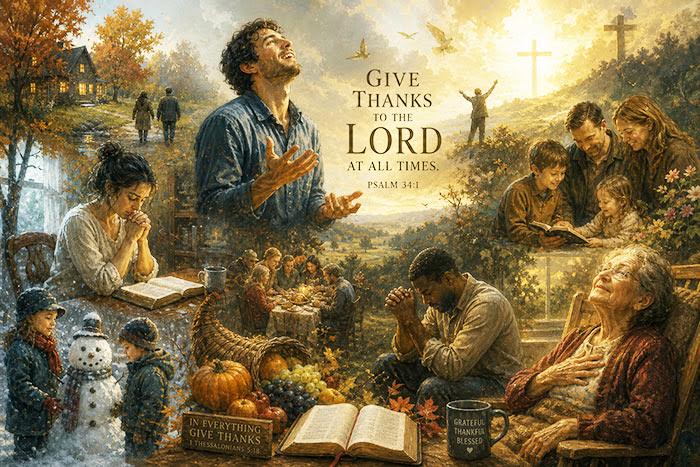
Top image credit: AI enhanced digital artwork depicting Christians giving thanks to the Lord through all times and seasons of life. Image source from artstyles.com. Used with permission.
Paul Beckman is a coordinator of the Word of Life community in Ann Arbor, Michigan, USA.