


In my earlier reflections on the Samaritans, I noted how remarkable it is that this small people still exist today. Empires have risen and fallen around them, yet they have remained faithful to the Scriptures they received and to the land where they have worshiped in for generations.
Their quiet persistence is a witness in a region often defined by division, preserving their identity across centuries.
But the Gospel story at Jacob’s Well also reveals that a second path began there.
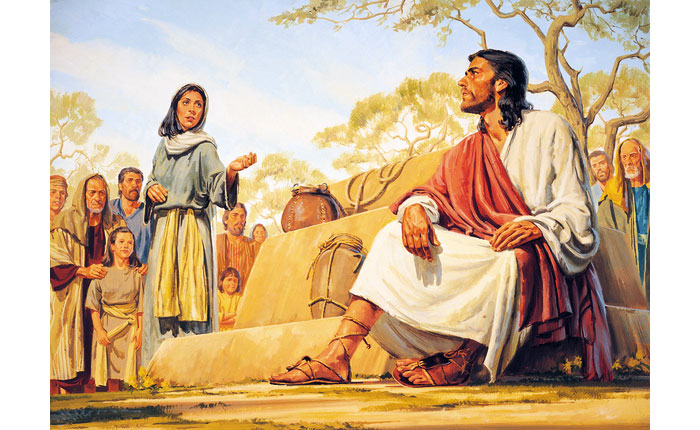
Jesus spoke with the Samaritan woman and redefined the meaning of worship:
Believe me, a time is coming when you will worship the Father neither on this mountain nor in Jerusalem… true worshipers will worship the Father in spirit and truth, for they are the kind of worshipers the Father seeks.
John 4:21, 23
The Gospel of John records that many Samaritans believed in Jesus because of her testimony.
When they heard Him for themselves, they declared: “We know that this is truly the Savior of the world.”
Eastern Christian tradition gives this woman a name. She is remembered as Photini, meaning “the Enlightened One.” According to that tradition, she did not simply believe in Christ quietly and return to ordinary life. She became a missionary, proclaiming the Messiah to others.
Eventually she carried that witness far beyond Samaria and, together with members of her family, was martyred for her faith.
Her story reminds us that following Christ does not mean simply blending peacefully into the world.
Christians are indeed called to live among others with humility and charity, without hatred or judgment. Yet the life of the Gospel inevitably confronts the world. Truth exposes falsehood. Mercy exposes hardness of heart. A life shaped by Christ often pricks the conscience of those around it.
Because of this, Christian witness has often led to suffering.
Photini herself was martyred. Countless Christians throughout history have faced persecution for remaining faithful to Christ. Even in our own day, believers continue to place themselves in danger rather than abandon the communities entrusted to them. During the current conflicts in the Middle East, a priest in Lebanon was killed because he refused to leave his people.
Christians do not seek conflict. Yet faithfulness to Christ sometimes brings it.
In this sense, the path taken by those Samaritans who accepted Jesus diverged from that of those who remained within the Samaritan tradition. The Samaritans who did not accept Christ continued their ancient worship on Mount Gerizim, preserving the Torah and their distinctive identity. Their quiet endurance across centuries remains a remarkable testimony of faithfulness.
But those Samaritans who believed in Jesus became part of something new. They joined the growing Christian Church, worshiping the Father not in one particular place but – as Jesus had foretold – in spirit and truth.
The Book of Acts records that the Gospel continued to spread through Samaria. Philip preached there, and many believed. The apostles Peter and John themselves came to confirm the new believers and pray that they would receive the Holy Spirit.
From that moment forward, two different paths unfolded from the same valley.
One path remained rooted on Mount Gerizim.
The other followed the living water that began flowing outward from Jacob’s Well.
Both paths offer lessons for us.
First, the survival of the Samaritan people reminds us that faithfulness across generations can preserve a people even amid constant upheaval.
Second, the witness of Photini and the early Samaritan believers reminds us that the Gospel does not simply preserve – it transforms. It calls people to follow Christ wherever that path may lead, even when it leads to suffering.
The Apostle Paul later described something of this tension when writing to the early Christian communities. Believers were not called to withdraw from the world, nor to conform themselves to it. They are called to live among others – working, serving, and loving their neighbors – while remaining faithful to the truth they have received. Christians live in the world, but they live as citizens of the world to come.
Perhaps that is one more lesson we can learn from Shechem.
From that well the message of the Messiah continues to flow outward, calling men and women to drink of the living water that leads to eternal life.
And we live in hope of the day when, as Scripture promises:
“He will wipe every tear from their eyes. There will be no more death or mourning or crying or pain, for the old order of things has passed away.”
Revelation 21:4
Until that day comes, we are not called merely to avoid the wars and conflicts around us. We are called to live in the hope of a new day without war.
And in the meantime, we must all strive to be Good Samaritans, offering aid and comfort to those who suffer so grievously.
Top image credit: Depiction of the Samaritan woman who introduced Jesus the Messiah to her villagers in Samaria. Image from GoodSalt.com, © illustration by Lifeway Collection. Used with permission.
Brian Murray is a coordinator in the People of Hope, in Newark, New Jersey, USA.