


TEXT: GENESIS 1:1–2:4
Introduction to chapter one
The Bible begins with the words “In the beginning.” That is the name of the first book of the Bible in Hebrew, because the books are named by their first words. In Greek, the name is Génesis, brought into English as our name for the first book as well. It means “coming to be.” The book is concerned primarily with the coming to be of the covenant people of God, but also with the coming to be of the world.
Genesis is the introduction to the first five books of the Bible, the Pentateuch, and to the history of the people of Israel.1 The bulk of Genesis is the account of the patriarchs (Genesis chapters 12– 50). There we find a description of the origin of the people of Israel. But the people of Israel were not the first human beings, and human history did not begin with the events narrated in Genesis 12, the call of the first patriarch, Abraham.
The beginning of the human race is recounted in Genesis 1–11. These chapters form an “introduction to the introduction” and tell us briefly of the origins of the human race, of the fundamental realities we encounter as human beings, and of human civilization. But creation did not begin with the human race. Chapter 1 goes back to the very beginning of creation and situates the beginning of the human race in that context. It tells us what was there at the outset – God. As it says in Psalm 90:2:
“Before the mountains were brought forth, or ever you had formed the earth and the world, from everlasting to everlasting you are God.”
Psalm 90:2
God with his creative power was there in the beginning, and he was the origin of everything else.
In this chapter we will look at Genesis 1. The account of creation in Genesis 1 does not end until the first few verses of chapter 2, but for convenience, we will refer to the whole account as Genesis 1. It is here that we will begin. What comes first lays the foundation for what comes after, and we will see that this is a repeating pattern in stage after stage of God’s plan for the human race.
One of the main questions that comes up for most readers of Genesis 1 (and Genesis 1–11) is “how literally” to take what the text says. The exposition of the texts in the first part of this book simply approaches the narrations as they present themselves. The issue of how literally to take the texts is reserved to the second part of the book – in the methodological discussion “2. Scriptural Interpretation and Literary Genre” p. 447, where the position is upheld that we should only take a text as literally as the text is intended to be taken.
In that same second part of the book, we will also take up historical questions that are often raised about the account in Genesis 1. How does the account relate to what we know from modern science? Where does it fit in human history? (see Chapter 2. Scriptural Interpretation and Literary Genre,” p. 447 and Chapter 9. “Historical Reliability,” p. 519).
In this book, we are not going to be mainly interested in the historical questions about the people and events we will be discussing. We will use understandings of the events narrated in Scripture that are historically defensible according to modern scholarly historiography, but we will not engage in defenses of the positions we have adopted. We are interested in how as Christians we should understand these people and events. For that we will primarily rely on both testaments, including the typological and spiritual interpretations they contain.
Creation
The Bible begins with a solemn opening, one unique in human literature for its simplicity and power. The first verse states:
“In the beginning God created the heavens and the earth.”
Genesis 1:1
There was an origin to the universe that we live in, and that origin was due to God. He created or made heaven and earth. This means he created everything, since heaven and earth is a scriptural idiom for saying “all there is.” Everything other than himself, then, came into existence by God’s action (Revelation 4:11; Hebrews 11:3; 2 Maccabees 7:28–29). This has been traditionally described as creation out of nothing, sometimes referred to by using the Latin creatio ex nihilo.
Beginning with verse 3, we have the six days of God’s work of creation. Each day is described within the same verbal structure, starting with and God said, and ending with and there was evening and morning, [another] day. At the end comes the seventh day. The opening in verse 1 and the closing in verse 4a2 frame the account (marked by an inclusion):3 Genesis 1, then, is the account of the creation of the heavens and earth, all things.
Before the six days of creation begin, the account sets the scene for God’s action of creation in a way that intensifies the dramatic nature of what is to follow. The second verse says,
“The earth was without form and void, and darkness was upon the face of the deep; and the spirit of God was moving over the face of the waters.”
Genesis 1:2
The verse speaks of the earth being absent or empty – probably the former since the earth is not created until the third day – perhaps a way of saying there was no place for us. It speaks about formless waters (the deep or the abyss) that go down on and on, darkness covering everything. We are looking out, and there is no identifiable thing, no thing in particular, to be found. Moreover, there are no boundaries, no perceptible outer limits to what we see, no horizon. There is only an indistinct darkness. Then we can sense something like a breeze or a wind beginning to move. The spirit of God is starting to work.
Whether the description in verse 2 is of a pre-existent formless or unknown state as a contrast to what is to come or a way of saying that there was nothing at the outset, verse 3, the beginning of God’s work of creation, presents the incomprehensible creative power of God beginning to act:
And God said, “Let there be light”; and there was light.
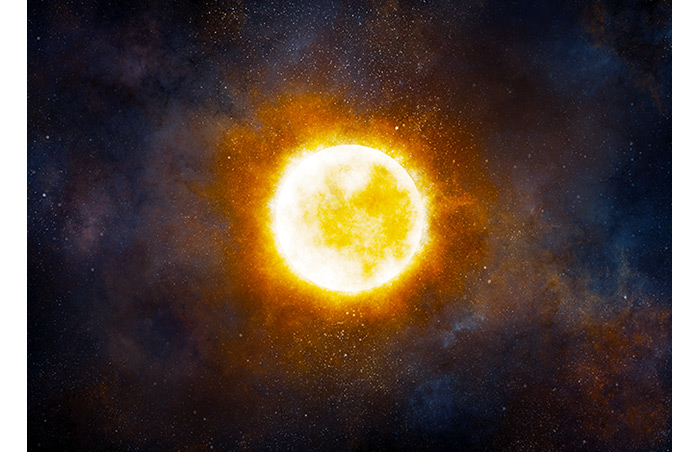
All of a sudden there is a blinding flash, something too powerful for human beings to imagine, something too powerful for human beings to endure.4 We are fortunate not to be there, only to be told about it by the only one who was present.
Even in modern science, light is understood to be special – pure energy. We would not want to be struck by lightning. We do not want to stare at the sun. A soft candlelight would burn us if we touched it. But behind the light that entered this world was God; for God is light as the Apostle John tells us (1 John 1:5). The light that appeared at the outset of creation was directly connected to God himself, who dwells in unapproachable light (1 Timothy 6:16).
The Apostle Paul in 2 Corinthians 4:6 quoted the words in Genesis by saying, God…said, “Let light shine out of darkness” or to use his next phrase in the darkness. He seemed to be saying that when God in Genesis said, Let there be light, he was not bringing light itself into existence. Rather, as many Christian Fathers and early Jewish interpreters have held, he was determining that the uncreated light of his own being shine in the nothingness and begin the process of creation.5
This, however, does not mean that all light is uncreated. There is, for instance, sunlight – energy of limited extent – and we exist as beneficiaries of that light. The description of the events in day 4 of creation speaks about the sun and moon and stars, created beings, as “lights.” We ourselves, when we strike a match, in a certain way bring some created light into existence.
However, the existence of created lights is a participation in the uncreated light, which is God himself and his word. His light, uncreated light, enables created lights to exist and function. Like all created things, a created light truly exists as a limited being, but only because it is sustained by the Creator God and participates in, that is, draws the kind of existence it has from, his nature as light. When God said “Let there be light,” his own uncreated power was bringing into existence the created order.
The shining forth of God’s light into the nothingness was not just a work of power. It was also a work of wisdom (Psalm 104:24; Proverbs 3:19–20; Proverbs 8:22–31; Job 28:20–28). God spoke and the created world came into existence. His speech was a word of command, and as a command it stated what the result of his speech should be. It contained in itself the nature, or plan, or rationality, of the universe. God not only brought into existence the created universe, he formed it in a wise way. The word of God was not just speech, but the speech that comes from reason or wisdom or, more likely, reason itself, the divine reason, the divine wisdom. The created result of light shining forth is not an unformed chaos, but a formed or ordered whole, an intelligible structure, a whole that is structured to be something good.
For the most part, we find ourselves occupied by particular things within our experience: a meal to eat, a task assigned by our boss, a friend to help. Some people may get no further than that. But most people, at some point, are impressed by the pervasive background of their life.
Yes, there are meals, assignments, and friends. Nonetheless, there is a world in which all these occur, and this background has an unchallengeable stability. Gravity takes over when we drop something. The sun rises and sets and gives us warmth and light. At night the stars come out and go through a pattern of movement that does not change year after year.
Now, with modern science, we have a complex and vast, though still limited, description of how these things happen, and we have found more change over time than we perceive in our ordinary experience. Nonetheless, can we affect that? Can we alter it? Can we get the star Sirius to rise a second earlier or gravity to reverse direction? We know we cannot.
God could. God simply said, “Let there be light,” and there was light. He spoke and it came to be; he commanded and it stood forth, as Psalm 33:9 says. We cannot imagine how there could be nothing or formless matter, then all of sudden a word from God, light bursting forth, and afterwards things coming into existence. But that, the opening description of Genesis tells us, is the ultimate fact about this universe we find ourselves in. In the beginning God already was, and it was his decision and his command that everything come into existence. Moreover it came into existence the way he said it should.
As children we slowly emerge to consciousness. At some point, if we are fortunate, we come to know about God and we learn that we too were created. The beginning of Genesis is not merely a description of a cause and effect relationship, a metaphysical statement about the origin of the universe that indicates the existence of a First Cause. The beginning of Genesis tells us something important about our own existence as mere creatures.
Because God created everything, he has the right to determine what everything should be and do. We can see this principle stated in Isaiah 45:9–12:
“Woe to him who strives with his Maker, an earthen vessel with the potter! Does the clay say to him who fashions it, ‘What are you making’? or ‘Your work has no handles’? Woe to him who says to a father, ‘What are you begetting?’ or to a woman, ‘With what are you in travail?’” Thus says the LORD, the Holy One of Israel, and his Maker: “Will you question me about my children, or command me concerning the work of my hands? I made the earth, and created man upon it; it was my hands that stretched out the heavens, and I commanded all their host.”
Isaiah 45:9–12
A clay pot simply has to accept the decision of the potter about what it should be and how it should function. Because a father is the source of his son, a new human being, he has an authority over his son and a responsibility for him. The same is even truer of the relationship of God and his creation. The same is true of God and each one of us.
God created everything. Because he created everything, he has authority over and responsibility for everything. He is the one who knows how everything should go, because he created everything for a purpose (Isaiah 46:8–11; Ephesians 1:11; Proverbs 16:4, etc.). Therefore, if we want to live in the way that we are made to live, we need to understand God’s mind and his purpose. If we want to live within creation and in harmony with the way creation is supposed to be, then we need to cooperate with him, the one who made it.
The creation
The first sections of Genesis 1 have more to tell us about the nature of creation, the world we live in. After the appearance of light and the separation of light from darkness, the account says,
And God saw that the light was good; and God separated the light from the darkness. God called the light Day, and the darkness he called Night. And there was evening and there was morning, one day.
There is a detail here, one that is easily overlooked. It says, there was evening and there was morning, one day. We would be inclined to say “the first day,” especially since we find the next days described as the second day, the third day, and so on to the seventh. Many traditional Jewish and Christian commentators, however, saw the difference in phrasing to be significant.
In this understanding, “one day” indicates that the first day, the beginning, was special. When light shone in the darkness, day began and all of creation came into existence. The rest of the days of creation unfolded what already had been done on the first day, the day that the Lord God made heaven and earth (Genesis 2:4). The shining forth of light into nothingness is in principle the creation of everything.
The first three days of creation recount the beginning steps of creation. Light appears. Then heaven appears, creating a space in the middle of the waters. Then the dry land appears in that space, separating the earth and the seas. All three of these are described in terms of a division or separation. God lets the light shine in the darkness and separates the light from the darkness. God then creates the “firmament” (RSV), perhaps a “dome” (NAB) or an “expanse” (NIV), and separates the waters above and the waters below. God then creates the earth and separates the land from the seas. In all three days there is a shaping of creation into distinct realms.
The starting point is emptiness or at least formlessness. Then God steps in, and as he creates, he makes a separation here, a separation here, and a separation here, and so brings order into his creation. Creation is the bringing into existence of an ordered whole. The very word cosmos, the word derived from the Greek that we use for the totality of material creation, means that it is an ordered whole.
The second three days – days 4, 5, and 6 – involve the creation of beings who populate the places created in the first three days. The fourth day, when the sun, the moon, and the stars were created, seems somewhat different from the fifth and sixth days. We would not think the sun, moon, and stars to be living beings in the same way as other creatures. Nonetheless, they move, even though their movement is limited to a set path. In fact, what we see in the text is a progression from the creation of things in the first three days that do not move but are the spaces in which things can move, to things that move in a set path, to things that have freedom of movement (birds, fish, and land animals), and then to things that not only have freedom of movement but also can choose how to live and so where to move (human beings).
The first three days of creation and the second three days of creation roughly correspond to one another. On the fourth day, we have the creation of the sun, the moon, and the stars. They are the beings that “rule over” what had been created on the first day, the day and the night. They are the beings that mark off the units of time, especially the times for the sacred observances within each year and from year to year, the divisions that should be the background of human life. They are also the beings that give light to the earth.
Then on the fifth day we have the creation of the fish and birds, who occupy what had been created on the second day, the sky and the sea. On the sixth day we have the creation of the animals that live on the dry land, which had been established on the third day, and the human race, which also lives on the dry land but is intended to rule over all living creatures.
The result is a habitable, limited dry land in an ordered, formed creation. But outside of that cosmos, as far as we can see, there is only darkness and the abyss. In creation, the Lord formed an ordered world of definite things, something good, in the midst of the kind of nothingness that prevailed in verse 2. As a created world, it only stays in existence, is sustained rather than falls back into nothingness, by the action of God, but, as we will see, is constantly threatened by that nothingness.
The later Scriptures indicate that from the darkness and abyss comes an opposition to God’s work that produces corruption and destruction, what is described as the kingdom of darkness (Colossians 1:13). The Apostle John, speaking of the course of God’s work of creation and salvation, going on even now but begun on day one, said the light shines in the darkness and the darkness has not overcome it (John 1:5). Other places in the Scriptures speak of conflict with various beings in the course of the work of creation (e.g., Psalm 74:12–14; 89:8–10; Job 26:11–12; Is 51:9–11). From the abyss [RSV: the bottomless pit] can come various hostile beings (Revelation 9:11; 11:7; 20:1–3).
As we shall see, at the end of this present time night shall be no more (Revelation 21:25, 22:5), and the action of God will triumph and secure the existence of his good creation. But in the meantime not everything goes smoothly. In Genesis 1, however, this opposition does not appear and all is simply the good work of God. As the first chapter of the Bible this is the overriding perspective, the background within which all subsequent challenges to God’s plan need to be seen (Psalm 89:11).
In summary, creation is an ordered whole. Even as the creation itself is described as an imposition of order, so the narrative, the very way the creation is described, is seeking to present the creation story in an orderly fashion. The account seems to be written in a way that itself makes a point about the creation that it is describing, namely, that the creation in its initial goodness flows from God, that the creation has an order and harmony that comes from God himself, and that God’s work involves actively forming and establishing the creation in the face of the alternative of chaos and nothingness.
Reading the Old Testament in the Light of the New
The presence of the Trinity
There is a long-standing Christian perspective on the beginning verses of Genesis that many Christians nowadays are not familiar with, what we might call a Trinitarian perspective. To begin with, in the text of Genesis, God’s creative work is connected with his word and with his spirit. Verse 3 says, God said, “Let there be light,” and there was light. Things happen as God speaks through his almighty word. In verse 2 we also see the presence of the spirit of God: the spirit of God was moving over the face of the waters. The spirit of God is present and at work; the word of God goes forth; the realities of the universe are created.
This description of creation is developed further in Psalm 33, which contains a short summary of the truth stated in Genesis 1. In Psalm 33:6 we read,
“By the word of the Lord the heavens were made, and all their host by the breath of his mouth.”
Psalm 33:6
The word “breath” is another English translation of the words for “spirit,” both in Hebrew and in Greek, and it was through God’s breath or spirit and through God’s word that the heavens were made.6
There is an obvious connection between the breath and the word. When people speak, they breathe out and form the breath into sounds. The word and breath come out together from the speaker and belong to him, the word expressing the meaning or reason of his action and the breath the power behind the speaking. Psalm 33, probably based on Genesis 1, understands God’s word and his spirit as his agents of creation. God acted by speaking a word, and therefore acted by sending forth his word and spirit (breath).
Many Christian teachers have seen these verses as a reference to the action of the Persons of the Trinity in creation. To some extent this view is based on Old Testament texts like Psalm 33, as we have seen, and Psalm 107:20 which speaks about God sending forth his word,
… he sent forth his word, and healed them and delivered them from destruction
and Psalm 104:30 which speaks about sending forth his spirit:
When you send forth your spirit, they are created and you renew the face of the earth.
Although the Old Testament speaks about God’s word and his spirit as if they were agents of creation, seemingly somewhat separate from God, they are his own word and spirit, and therefore also divine.
In the New Testament we see even clearer statements. The Apostle Paul says in 2 Corinthians 3:6 that the Spirit gives life. The Spirit of God then, is a life-giver and so a creator.
The word of God is also a creator. The key place where we see this is in John 1:1–3, a commentary on Genesis 1:1, beginning with the same words as Genesis 1:1—In the beginning.
“In the beginning was the Word and the Word was with God, and the Word was God… All things were made through him, and without him was not anything made that was made.”
John 1:1–3
This Word (of God) was the one through whom all things were made, or in whom all things were created (Colossians 1:16). To say, then, that the Word was the one who created all things is to say that he is divine, because the one true God is the one who created all things, and the only one who created all things. Therefore, the Gospel of John says the Word was God [RSV] or the Word was divine.
What was God’s word when he created all things? God said Let the light shine out of (or in) the darkness. The Word of God was the light that shone in the darkness. This Word was “true God from true God, light from light,” as the Nicene Creed puts it. This was the Word who became flesh (John 1:14) in Jesus Christ.
When we say that Genesis 1:1–3 contains a Trinitarian reference, we are not necessarily saying that the authors of Genesis or Psalm 33 conceived of God as three hypostases or three persons in one substance (being), to use the formulae of the early Christian creeds. We are, however, saying that now that we know about the Trinity through Christian revelation, now that we understand that there is one God in three hypostases or persons, we can go back and ask whether the Trinity was manifested at all in the Old Testament.
Many of the Fathers said that of course the Trinity was manifested, and one place we can see that is in the first verses of Genesis. When Genesis talks about God speaking (with his word and his spirit or breath), it is speaking about a threefoldness in God. We now know, as a result of the Incarnation of God’s Son, the Word, and as a result of the outpouring of the Spirit, that the Trinity was being spoken about in the first chapter of Genesis. The threefoldness to which these verses refer is manifested more fully in the New Testament, and was understood better after the discussions of the early Christian Fathers that led to the creedal statements of the early ecumenical councils.7
To read the Old Testament in the light of the New, then, does not mean that we necessarily think that Old Testament authors understood things the way Christians do. Probably they did not, unless they had some special revelation. It means, however, that we now understand some things about God and his plan that they did not. As a consequence, we can see some things in the Old Testament that old covenant readers would not have seen, either because we know something more about the realities of which they speak or because we know something more about what God was aiming at. In doing so, we are not adding anything to the text or reading anything into it.8
To use an example, when whalers three hundred years ago said that there were great fish called whales in certain areas of the world, and their blubber gave useful oil, we know perfectly well what they were talking about and agree with what they said. However, we would not describe whales as fish but as mammals, because they take their oxygen from the air, not from the water, using lungs, not gills. Earlier, anything that swam in the waters and used fins for locomotion was called a fish.
We have changed our terminology because we have a more developed (and useful) understanding of biological structure, so we would not classify whales as fish anymore. But the whalers of old and writers who passed on what they said were talking about the same animals we are, and saying true things about them. We have no trouble in finding those animals and verifying what those older authors said about them, even though we have a more developed knowledge of the animals – and we rightly read what they said in the light of our more developed knowledge about whales.
In a similar way, as a result of the coming of Christ and of the Trinitarian discussions in the patristic period, we would now speak of the Spirit of God as a distinct hypostasis or person in the Trinity. But the human author of Genesis was talking about one and the same Spirit of God we are, and saying true things about him, things that we can recognize and accept. He was in fact talking about the Holy Spirit, the same Holy Spirit Christians believe in. And likewise he was talking about the same Word of God Christians believe in. So when we say that the Triune God was at work in the creation, we are not contradicting what the text of Genesis is saying or reading something into it that was not there. We understand it in a fuller way because we have more knowledge about the Spirit of God and the Word of God.
Notes:
1For “Some Terms for Parts or Versions of the Bible,” see the glossary on p. 392.
2Here we follow the view that Genesis 2:4 is a transitional verse, ending the previous section and beginning the new section, but expressing a unity to the two sections by the chiastic way the verse is constructed.
3For “chiasm,” “inclusion,” and other technical words for biblical style that will be used in what follows, see the glossary “Some Literary Terms for Describing Biblical Style” on p. 394.
4The physicist Robert Jastrow, quoted in Francis Collins, The Language of God: A Scientist Presents Evidence for Belief (London: Simon & Schuster UK, 2007), 67, describes the “Big Bang” by saying, “the chain of events leading to man commenced suddenly and sharply at a definite moment in time, in a flash of light and energy.” Many nowadays hold, with some good reason, that Genesis 1 should not be interpreted by concordism with modern science (see the discussion of “Scriptural Interpretation and Literary Genre” on p. 447). Nonetheless it would seem strange to ignore the fact that the scientific description of the origin of the universe of which we are now confident—the Big Bang—conforms so well to Genesis 1:3, and also gives us some further understanding of what Genesis 1 so succinctly describes.
5For a fuller presentation of the view in Old Testament, Christian, and Jewish tradition that the light on day 1 was uncreated light, see Mark S. Smith, The Priestly Vision of Genesis 1 (Minneapolis: Fortress Press, 2001), 73–77.
6See also Judith 16:14, probably quoting and developing Ps 33:6: “Let all your creatures serve you, for you spoke and they were made. You sent forth your Spirit, and it formed them; there is none that can resist your voice.” See also Wisdom 9:1; 16:12; and 18:15 for the portrayal of the word as an agent of creation.
7Rather than speaking about God’s word as describing the agency of Christ in creation, some of the Christian Fathers said that Christ was the beginning, and all things were created in him, that is, in him who is the beginning. All of the Christian Fathers who wrote about the creation were convinced that Christ and the Spirit had to be agents in the creation, and that their presence could be traced in the text of Genesis 1.
8The question of what constitutes eisegesis (reading something into the text that is not there) is discussed more fully in the section “Eisegesis and Ideological Exegesis,” on p. 507.
9See Stephen B. Clark, Man and Woman in Christ: An Examination of the Roles of Men and Women in Light of Scripture and the Social Sciences (Ann Arbor, MI: Servant, 1980; East Lansing, MI: Tabor House, 2006), 11–13 (hereafter cited as Clark, MWC), for a general presentation of “image and likeness”; see Fergus Kerr, Twentieth–Century Catholic Theologians: From Neoscholasticism to Nuptial Mysticism (Oxford: Blackwell, 2007), 194–5, for important observations on how the idea has functioned in traditional and contemporary theology.
10Thomas Aquinas, Summa Theologiae, hereafter ST, I, 91, 4, ad 2. For one example of the main view among Christian teachers, see Ambrose of Milan, De paradiso (New York: Fathers of the Church Inc., 1961), 253.
11A summary of this understanding can be found in the technical note “Numerology, The Number Seven” on p. 419.
12Augustine of Hippo in De Trinitate, 4.4.7: “Sacred Scripture commends the perfection of the number six to us especially in this, that God completed his works in six days and made man in the image of God on the sixth day. And the Son of God came in the sixth age of the human race and was made the Son of man, in order to re-form us in the image of God. This is the age in which we are at present, whether a thousand years are assigned to each age or whether we settle upon memorable and notable personages as turning points of time. Thus the first age is found from Adam to Noah, the second from that time to Abraham, and after that … from Abraham to David, from David to the carrying away to Babylon, and from then to the birth of the Virgin. These three ages added to those make five. Hence the birth of the Lord inaugurated the sixth age, which is now in progress up to the hidden end of time.”
13There is also a pervasive numerology in the text that indicates we are being given a statement about the completeness (including, likely, the future completion) of the universe. In addition to the seven days that structure the account as a whole, there are seven Hebrew words in 1:1; 14 (7 x 2) in 1:2; and 35 (7 x 5) in 2:1–3. In Gen 1:1–2:3, God is mentioned 35 (7 x 5) times, earth 21 (7 x 3), heaven/firmament 21, and the phrases “it was so” and “it was good” 7 times. Seven is the number of completeness and probably also the number of divine action. It is coded into the Israelite festal calendar as well and into the account of the building of the tabernacle (see the technical note “Numerology” on p. 419). The coded numerology indicates that we are reading an account of the complete work of creation.
This article is excerpted from The Old Testament in the Light of the New: The Stages of God’s Plan, Chapter One, copyright © 2017 by Stephen B. Clark, and published by Emmaus Road Publishing, Steubenville, Ohio USA. Used with permission.
- See Genesis: The Creation of the Human Race Part 2, by Steve Clark
Top image credit: Creation – In the Beginning, © illustration by Kevin Carden, from ChristianPhotoshops.com. Used with permission.
Steve Clark has been a founding leader, author, and teacher for the Catholic charismatic renewal since its inception in 1967. Steve is past president of the Sword of the Spirit, an international ecumenical association of charismatic covenant communities worldwide. He is the founder of the Servants of the Word, an ecumenical international missionary brotherhood of men living single for the Lord.
Steve Clark has authored a number of books, including Baptized in the Spirit and Spiritual Gifts, Finding New Life in the Spirit, Growing in Faith, and Knowing God’s Will, Building Christian Communities, Man and Woman in Christ, The Old Testament in Light of the New.
- See articles by Steve Clark in Living Bulwark Archives